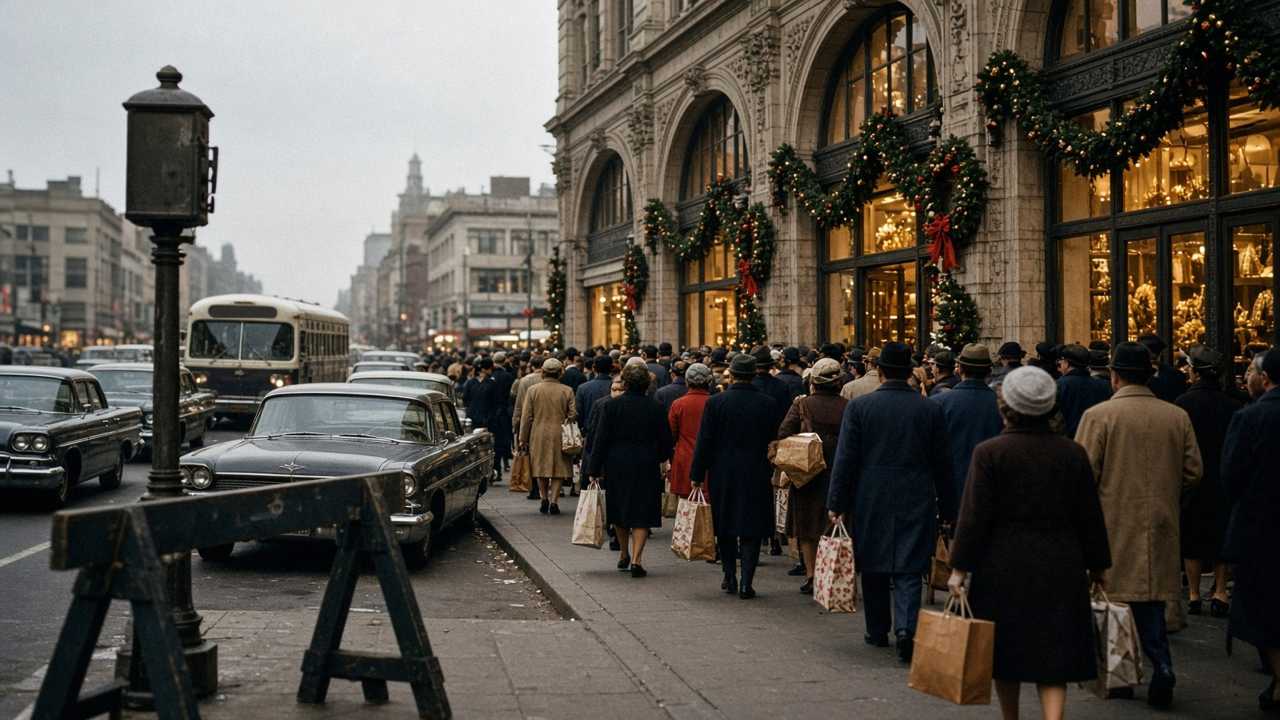
On November 28, 1960, Women's Wear Daily reported from Philadelphia that local sources were bitter about radio bulletins and police warnings of record traffic jams "for 'black Friday.'"
The name did not sound like a bargain. It sounded like a mess. That item is the earliest print use researchers have found for "Black Friday" as a post-Thanksgiving shopping crunch. The quotation is solid. The page number is not. One transcription says page 4. Another says page 2.
I'm Damon Nelson. I've been a marketer and developer for more than 30 years, and this story is for anyone stuck with a nickname they would rather replace. Philadelphia merchants tried to kill the phrase, failed, and later changed what people were told it meant.
The words already sounded like trouble
English speakers had long attached "black" to a day of the week to mark disaster or ruin. An older American "Black Friday" already named Friday, September 24, 1869, when Jay Gould and James Fisk's attempt to corner gold collapsed after President Grant authorized Treasury Secretary George S. Boutwell to sell gold. That crash is a financial panic. It is not the origin of the shopping holiday. When Philadelphia police used the words in the early 1960s, listeners already heard misfortune, not profit.
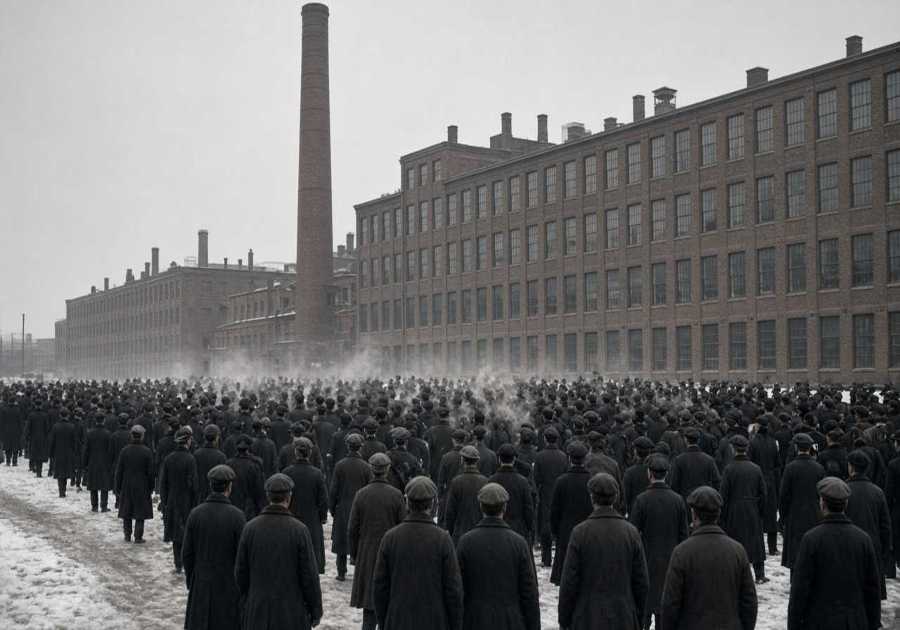
The earliest pairing of "Black Friday" with the day after Thanksgiving that researchers cite is not a shopping story either. In November 1951, M. J. Murphy wrote in Factory Management and Maintenance about "the 'Black Friday'" as a day when workers called in sick after Thanksgiving. Later work has also found 1957 uses for a Friday after any Thursday holiday. Researchers leave open whether that labor usage and the later police usage are connected. I won't collapse them into one origin story.
The traffic and the rename that failed
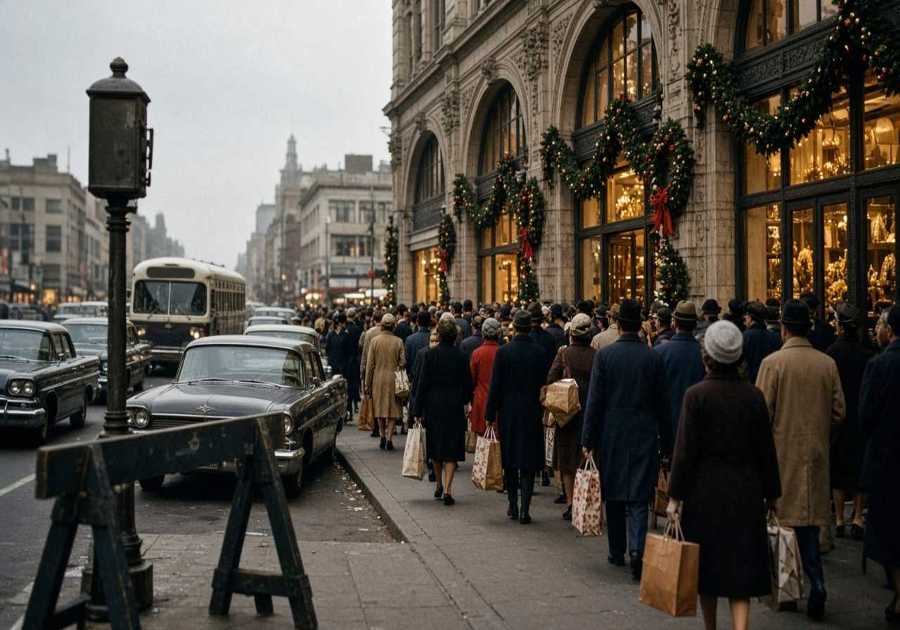
By the late 1950s and early 1960s, the Friday after Thanksgiving in Center City Philadelphia stacked three pressures: the official start of Christmas shopping, closed schools, and visitors arriving late in the day for the Army-Navy football game, then a regular Philadelphia fixture, often played the next day. That combination comes from reporter Joseph P. Barrett, and later accounts repeat the Army-Navy traffic point. I don't have each year's game date, so I won't add one.
On December 18, 1961, Public Relations News said Philadelphia officers already customarily called those two days "Black Friday and Black Saturday." Merchants, working with Deputy City Representative Abe S. Rosen, tried to convert the names to "Big Friday and Big Saturday." The newsletter also claimed the weekend was a success. That's public-relations copy, not measured sales data.
Philadelphia is the best-documented early center of this usage, and the place with the rename fight, but it was not alone. That same weekend, a Shortsville, New York, item said Rochester police also called the day "Black Friday." I won't write that Philadelphia invented the phrase.
In a November 25, 1994, Philadelphia Daily News column, Barrett said the term "came out of the old Philadelphia Police Department's traffic squad," and that in the early 1960s he and Nathan Kleger put it on the Evening Bulletin's front page. Merchants complained to Police Commissioner Albert N. Brown that the coverage kept customers away. The following year, Barrett said, Brown issued a "Big Friday" press release. Barrett and Kleger "held our ground." He also remembered a trombone player from the police band directing traffic.
This is a memoir, written more than 30 years later. The early Bulletin clips have not been digitized. Rosen's 1961 advice and Brown's press release may be the same campaign, or successive tries. The sources don't nail Barrett's first front-page year, and they don't prove he and Kleger were the first to print the slang.
In January 1966, stamp dealer Martin L. Apfelbaum still gave the police meaning in The American Philatelist: "the name which the Philadelphia Police Department has given to the Friday following Thanksgiving Day. It is not a term of endearment to them." The day brought "massive traffic jams and over-crowded sidewalks." If the profit story had already been the local meaning in 1965, that is not how a downtown merchant would have introduced the term.
"Big Friday" was not a new invention. Pennsylvania papers were already using it in 1957 and 1958, including an Inquirer headline, "Biggest Big Friday." The official campaign still failed. The name was vivid, already in police mouths, and useful to reporters describing a mess.
THEY TRIED TO CALL IT BIG FRIDAY. THE OLD NAME STAYED.
Keep the name, change the meaning
By 1970 a department-store spokesman could treat the name as a puzzle. In the Inquirer, Traffic Patrolman Stanley Makarewicz still told Al Haas that police and cab drivers called it Black Friday because "it is supposed to be the worst traffic day out of the whole year." Later in the same piece, Reeves Wetherill of Wanamaker said, "It's called Black Friday, but no one knows why," and suggested that "the only thing black about it" was "the color of the ink used to record it in the store ledgers." That is an early, still tentative reframe, sitting next to the older traffic explanation. A 1975 Associated Press article still had a Gimbels sales manager tying the name to the headaches it gave bus and cab drivers.
On November 28, 1981, Grace McFeeley of Cherry Hill Mall told the Inquirer the name was used "Because it is a day retailers make profits, black ink." In the same cluster of quotes, William Timmons of Strawbridge & Clothier said, "I think it came from the media," and Belle Stephens of Moorestown Mall said employees used it because it was "a long hard day." Even then, those meanings sat side by side.
By November 26, 1983, the Inquirer itself was repeating the ledger story as fact, saying the name comes from pre-Christmas sales that usually mean the difference between "red ink" and "black ink" for the year.
Not every merchant was convinced. On November 24, 1984, Peter Strawbridge, president of Strawbridge & Clothier, said, "It sounds like the end of the world, and we really like the day. If anything it should be called 'Green Friday.'" Oral accounts later credited him with inventing the profit meaning. A 2012 Inquirer report found "no documentation has yet been found to support that." His 1984 quotes run the other way. He wanted the name gone.
A year later the fight was still local. Irwin Greenberg of Hess's in Allentown called the phrase "sinful" and "disgusting." Carol Sanger of Federated Department Stores in Cincinnati said she had "never heard it before," and that "Black Friday out here means the day of the Great Flood in 1937." The National Retail Merchants Association said it was "not an accepted term in the retail industry." David Feld, a Philadelphia native, still credited the Police Department. The paper then added that "a more accepted explanation among merchants" was the shift from red pencils to black.
The term, still common around Philadelphia in the 1970s, is usually placed as a national name in the late 1980s or early 1990s, sold along with the ledger explanation. I don't have a city-by-city map. That range is the careful one, and the 1985 article is evidence it was not yet national.
A story that is false
A later social-media claim that the shopping day began as a discounted sale of enslaved people is false. There is no supporting evidence. Slavery in the United States was abolished in 1865, nearly a century before the shopping usage is documented. A photograph often used with the claim, sometimes captioned "Black Friday 1904," shows Aboriginal prisoners in Wyndham, Western Australia, and was published around 1905, not a U.S. slave sale. The Associated Press, Snopes, and PolitiFact all rate the claim false. Department-store historian Michael Lisicky told AP he had "never come across the connotation that Black Friday originates from the selling of slaves."
How to use it in your business
Here's what I take from it. A name already in use is hard to retire, especially when the press prefers the sharper phrase. The first instinct is to replace it. "Big Friday" and "Green Friday" both lost.
The move that eventually worked was to keep the name and change what it was said to mean. That has a cost. A tidy origin that flatters the teller is easier to repeat than a story about cops, gridlock, and a failed press release. Many people now meet the ledger explanation first.
How to use it: If you're stuck with a nickname you dislike, ask first whether it's already in wide use. If it isn't, you may still be able to retire it. If it has stuck after years of resistance, a substitute often fails. Then you have a choice. You can live with the old meaning, or you can keep the name and tell a clearer story about what you want it to mean. And if someone hands you a flattering origin story for a word you use in public, check the early sources before you repeat it.
Sources
- Bonnie Taylor-Blake, "Black Friday (day after Thanksgiving), 1961," American Dialect Society list (ADS-L), May 5, 2011: https://listserv.linguistlist.org/pipermail/ads-l/2011-May/109292.html
- Bonnie Taylor-Blake, "[1966] 'Black Friday' (day after Thanksgiving)," ADS-L, April 23, 2008: https://listserv.linguistlist.org/pipermail/ads-l/2008-April/081311.html
- Bonnie Taylor-Blake, "[1966] 'Black Friday' (day after Thanksgiving)," ADS-L, April 24, 2008: https://listserv.linguistlist.org/pipermail/ads-l/2008-April/081342.html
- Bonnie Taylor-Blake, "'Black Friday' (day after Thanksgiving), 1951," ADS-L, August 5, 2009: https://listserv.linguistlist.org/pipermail/ads-l/2009-August/092018.html
- Bonnie Taylor-Blake, "Whitewashing Black Friday: The Rebranding of an American Shopping Holiday," So They Say, June 29, 2019 (updated November 25, 2024): https://btaylorblake.com/2019/06/29/whitewashing-black-friday-the-rebranding-of-an-american-shopping-holiday/
- Joseph P. Barrett, "This Friday Was Black with Traffic," Philadelphia Daily News, November 25, 1994, p. 80; reprinted as "Philly's role in the naming of 'Black Friday' started with Center City traffic," The Philadelphia Inquirer, November 22, 2022: https://www.inquirer.com/archive/black-friday-thanksgiving-origins-history-philly-20221122.html
- "Black Friday / Cyber Monday," Wordorigins.org, November 21, 2023: https://www.wordorigins.org/big-list-entries/black-friday-cyber-monday
- Ben Zimmer, "The Origins of 'Black Friday,'" Word Routes, Visual Thesaurus / Vocabulary.com, November 25, 2011: https://www.visualthesaurus.com/cm/wordroutes/the-origins-of-black-friday/
- Barry Popik, "Black Friday (Big Friday)," September 24, 2017: https://barrypopik.com/blog/black_friday_big_friday
- Joseph Gambardello, "Did Philly cops coin 'Black Friday'?", The Philadelphia Inquirer, November 21, 2012: https://www.inquirer.com/philly/hp/news_update/Black_Friday_started_in_Philly.html
- Associated Press (Beatrice Dupuy), "How Black Friday became associated with sales," WUKY reprint dated November 28, 2025: https://www.wuky.org/text/wuky-news/2025-11-28/how-black-friday-became-associated-with-sales
- David Mikkelson, "How Did 'Black Friday' Get Its Name?", Snopes, November 30, 2013: https://www.snopes.com/fact-check/black-friday-origins/
- Caroline Wazer, "Black Friday: How Did the Day After Thanksgiving Get Its Name?", Snopes, November 29, 2024: https://www.snopes.com/articles/468554/black-friday-thanksgiving-name/
- Monique Curet, "Black Friday did not originate with the sale of enslaved people," PolitiFact, December 1, 2021: https://www.politifact.com/factchecks/2021/dec/01/facebook-posts/black-friday-did-not-originate-sale-enslaved-peopl/
- Donald P. Morgan and James Narron, "Crisis Chronicles: The Gold Panic of 1869, America's First Black Friday," Liberty Street Economics, Federal Reserve Bank of New York, January 15, 2016: https://libertystreeteconomics.newyorkfed.org/2016/01/crisis-chronicles-the-gold-panic-of-1869-americas-first-black-friday/