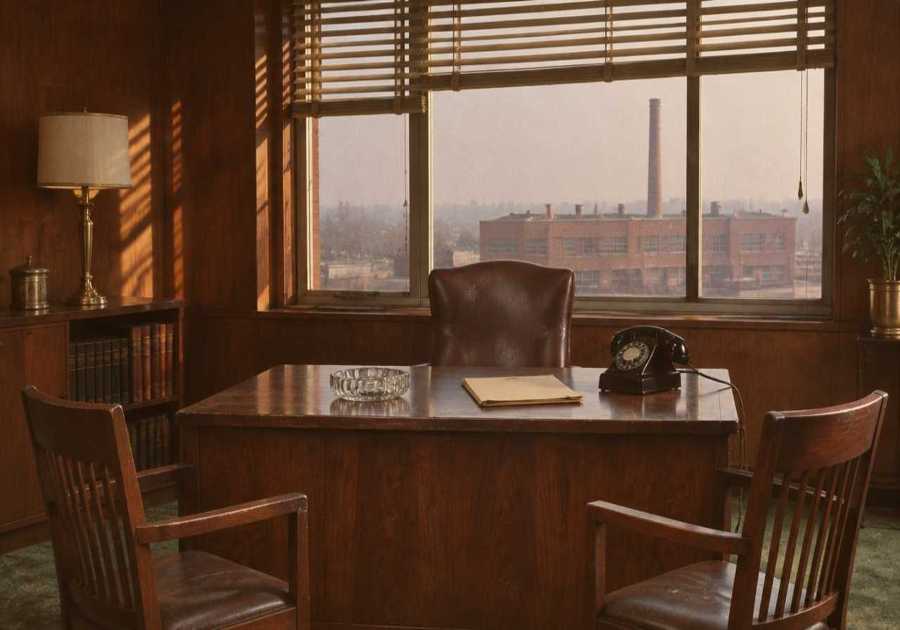
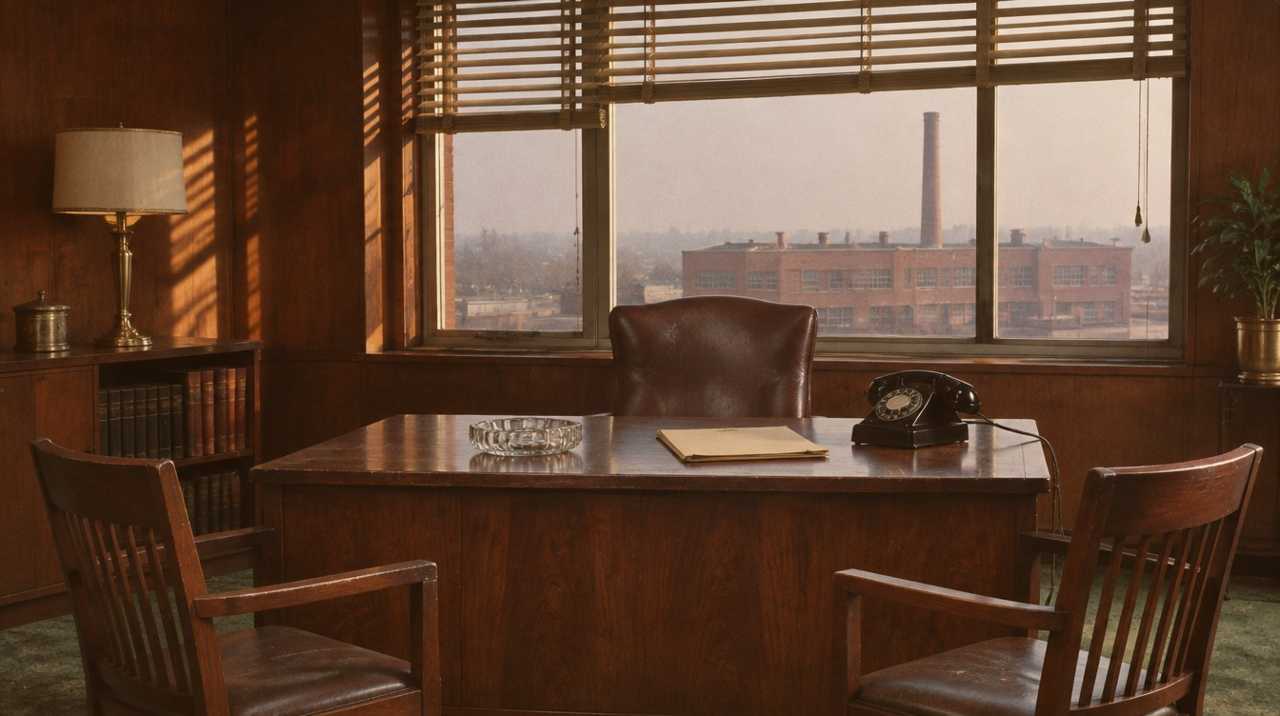
In 1965, Jack Dowd was hired to help Hershey set up its first marketing department. During his interviews, he met Harold Mohler, whom the Hershey Community Archives label as the president of Hershey Chocolate Corporation. Mohler gave him a warning.
Dowd recalled it in a 1991 oral history interview. Mohler said: "They seem to like you here, but a couple of things you should know about Hershey. One is, we don't advertise."
I'm Damon Nelson. I've been a marketer and developer for more than 30 years, and this story matters to anyone who runs on a rule that worked once and has never been tested since. Hershey's rule was famous.
The legend, and what the archives say
The Hershey Community Archives call it "an advertising industry legend that Hershey Chocolate did not advertise." They also say the image of a company that succeeded without advertising "stretches the truth."
HERSHEY DID NOT USE NEWSPAPER, RADIO OR TELEVISION ADVERTISING UNTIL 1970, ACCORDING TO ITS OWN ARCHIVES.
A separate Archives article says the company was "over 75 years old" before it used media advertising. I'm not using a rounder number than the sources give me.
Even that has edges. The Hershey Story museum says early newspaper ads invited housewives to write for a free trial sample of Hershey's Cocoa, and that a billboard stood beside the Brooklyn Bridge in 1902. So "almost no consumer media advertising" is the safer claim.
Where the money went instead
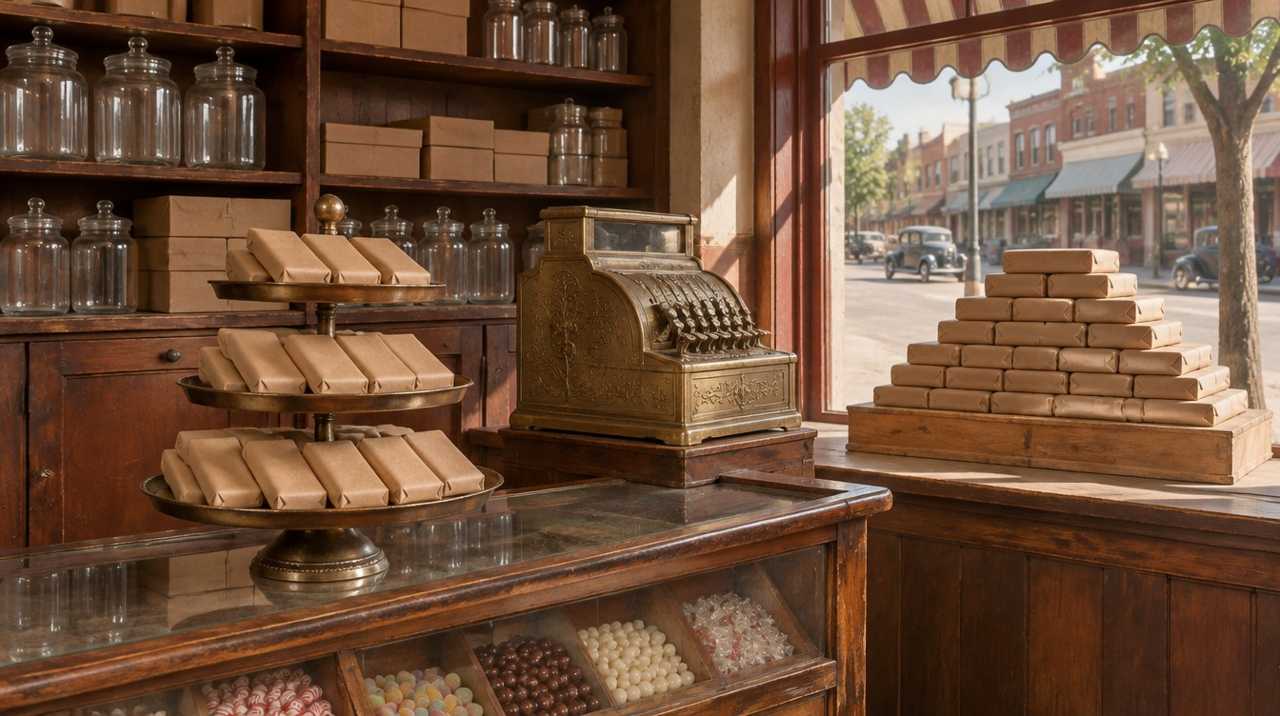
The Archives say Hershey "concentrated all its advertising budget towards the trade." That meant ads in trade publications, cut sheets retailers could use in their own newspaper ads, shelf talkers and window displays.
The Archives also describe "elaborate and often whimsical" store window sets. And for about a decade, Hershey tucked postcards into its milk chocolate bars. Pennsylvania Heritage Magazine dates them to 1909 through 1918 and reports 75 million printed in one year.
Factory tours began shortly after the factory opened. By 1970, the Archives say, almost one million people toured it each year. They describe the tours as valuable for "consumer relations." No source I found says tours took the place of ads, so I won't say that.
Three guesses and three yeses
Dowd answered Mohler's warning this way, in his own words: "I'm vividly aware of that. Everybody in marketing is aware of that. But I have a couple of hypotheses about your company."
He did not ask three questions. He made three guesses, and Mohler confirmed each one. Share of market had been declining: "Yes, it has." New products were not as successful as old ones: "That's true. They're not." Products were not as popular with children as with adults: "That's true."
Dowd told him, "Given those three, you're going to start to advertise." Mohler's reply:
"Well, we haven't decided yet."
Where Mars fits
The Archives say that during the 1960s, "Mars steadily gained market share." John Haddad, writing in The Conversation in 2025, says that by the end of the decade Mars "had caught Hershey in terms of market share."
One company history goes further. The International Directory of Company Histories, in a 1993 volume, says Mars "took over the top spot in the early 1970s." That is one source. I found no second, independent one, so I'm treating it as that source's claim. I also can't tell you Mars was already ahead by September 1970, because nothing I found says so.
Years of groundwork, then September 1970
The Archives say Hershey first had to build the infrastructure for a modern marketing program, and "that took several years."
Hershey interviewed six agencies and hired Ogilvy & Mather. A July 21, 1969 memo to employees explained why. Hershey noted that "almost half of the people in the United States today are under 25 years of age," and wanted to reach that younger group.
Hershey tested the advertising on three brands, Hershey's Milk Chocolate, Reese's Peanut Butter Cups and Hershey's Instant. Tests ran in seven cities for several months. Then, in September 1970, it launched a national campaign.
The Hershey Story museum describes it as the company's first national mass media campaign, with radio and television spots.
The Ogilvy & Mather creative director on the Milk Chocolate team, Billings Fuess, developed the line "Hershey. The Great American Chocolate Bar." In a 2010 oral history, he said he "wanted to give them a dig" at the Swiss competition.
THE GREAT AMERICAN CHOCOLATE BAR WAS THE BASIS OF HERSHEY'S MILK CHOCOLATE MARKETING FROM 1970 UNTIL 1994.
The Archives say the campaign "served the company well." I found no sales figures to put a number on that.
How to use it in your business
Here's the lesson I take from it. A rule can be true for decades and still be a bet. Hershey's "we don't advertise" held while it had few competitors. When share, new products and the young audience all pointed the same way, the rule needed testing.
The honest limit: this is one company, told largely through its own archives and one executive's memory, recalled 26 years later. Hershey also did not jump. It spent years on groundwork and tested in seven cities first. A rule can also be right. This is a pattern, not a guarantee.
How to use it: write down one rule you run on, such as "we don't discount," "we only use referrals" or "we never post on weekends." Then test Dowd's three guesses against your own numbers. Is your share of customers or revenue shrinking? Are your newer offers doing worse than your older ones? Is your audience older than the one you want? If all three answers are yes, test the opposite on a small scale for a few weeks, in one place, and compare the results.
Sources
- Hershey Community Archives, "HersheyArchives@30, Part 30: Hershey Chocolate. The Great American Chocolate Bar," hersheyarchives.org, November 10, 2015: https://hersheyarchives.org/encyclopedia/hersheyarchives30-30-hershey-chocolate-the-great-american-chocolate-bar/
- Hershey Community Archives, "There's More Than One Way to a Consumer's Heart," hersheyarchives.org, May 9, 2012: https://hersheyarchives.org/encyclopedia/theres-more-than-one-way-to-a-consumers-heart/
- Hershey Community Archives, "Advertising Hershey Chocolate," hersheyarchives.org, December 7, 2011: https://hersheyarchives.org/encyclopedia/advertising-hershey-chocolate/
- Hershey Community Archives, "HersheyArchives@30, Part 28: The Wonderful World of Chocolate - Hershey's Chocolate World," hersheyarchives.org, October 21, 2015: https://hersheyarchives.org/encyclopedia/hersheyarchives30-28-the-wonderful-world-of-chocolate-hersheys-chocolate-world/
- James McMahon, "Sure to Attract Much Attention: The Advertising Genius of Milton S. Hershey," Pennsylvania Heritage Magazine, Fall 2020: https://paheritage.wpengine.com/article/sure-to-attract-much-attention-the-advertising-genius-of-milton-s-hershey/
- Valerie Seiber, "Hershey's Chocolate Takes Flight," The Hershey Story Museum, April 24, 2015: https://hersheystory.org/hersheys-chocolate-takes-flight/
- John Haddad, "How Hershey's chocolate survived an attack from Mars and adopted a business strategy alien to its founder," The Conversation, October 29, 2025: https://theconversation.com/how-hersheys-chocolate-survived-an-attack-from-mars-and-adopted-a-business-strategy-alien-to-its-founder-267722
- "Mars, Inc.," International Directory of Company Histories, Vol. 7, 1993 (adapted text, no author listed), company-histories.com: https://www.company-histories.com/Mars-Inc-Company-History.html