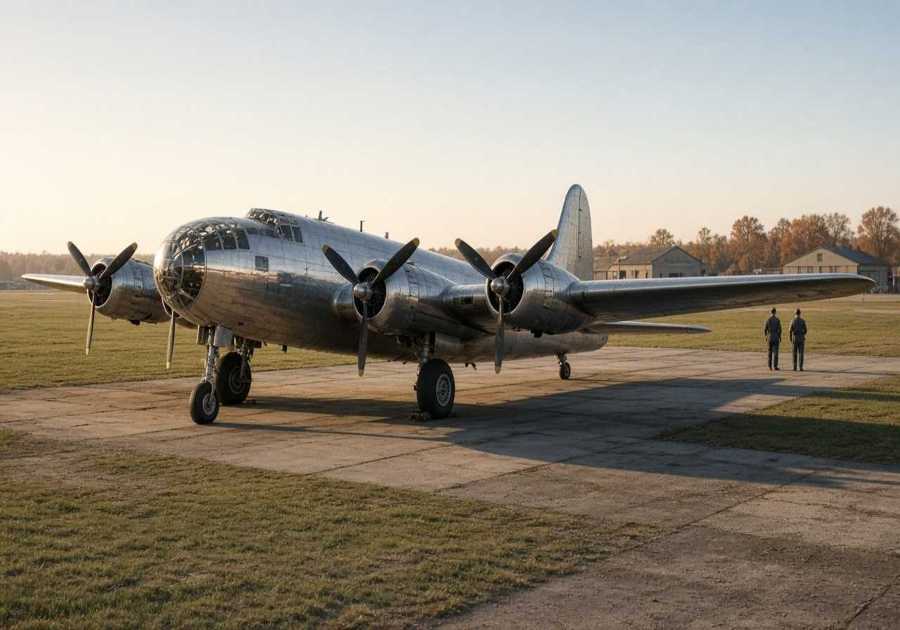
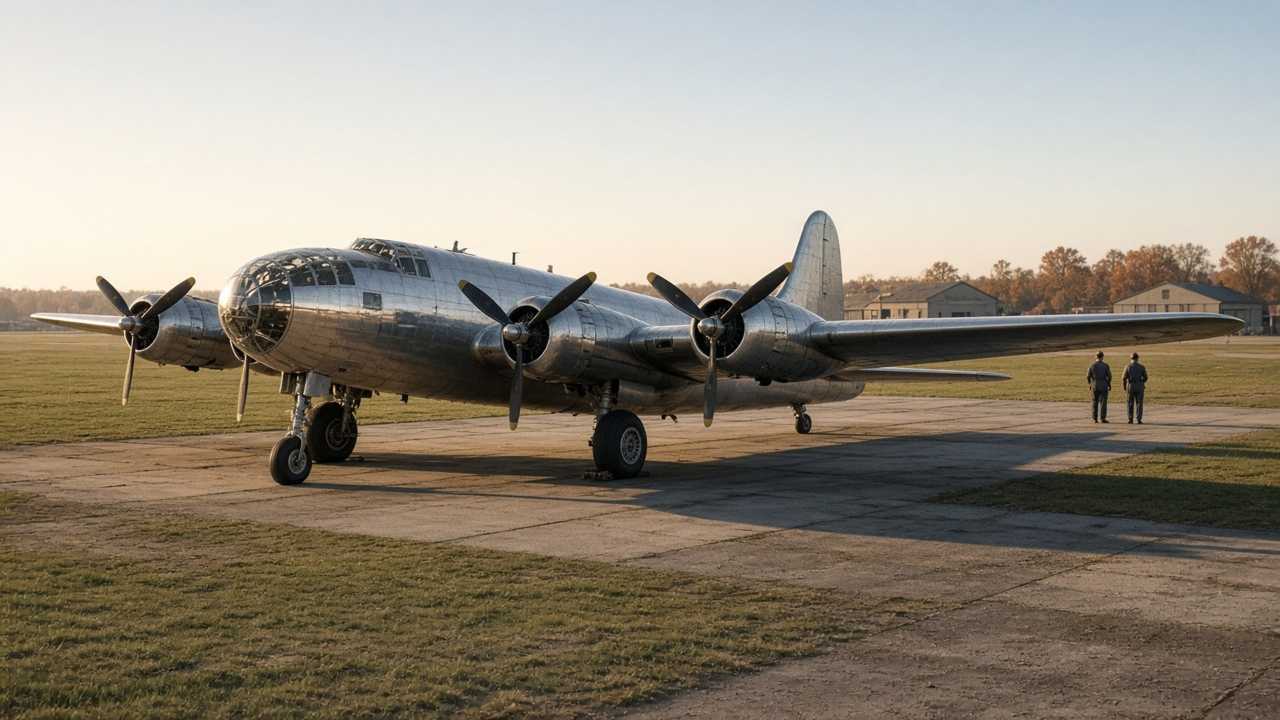
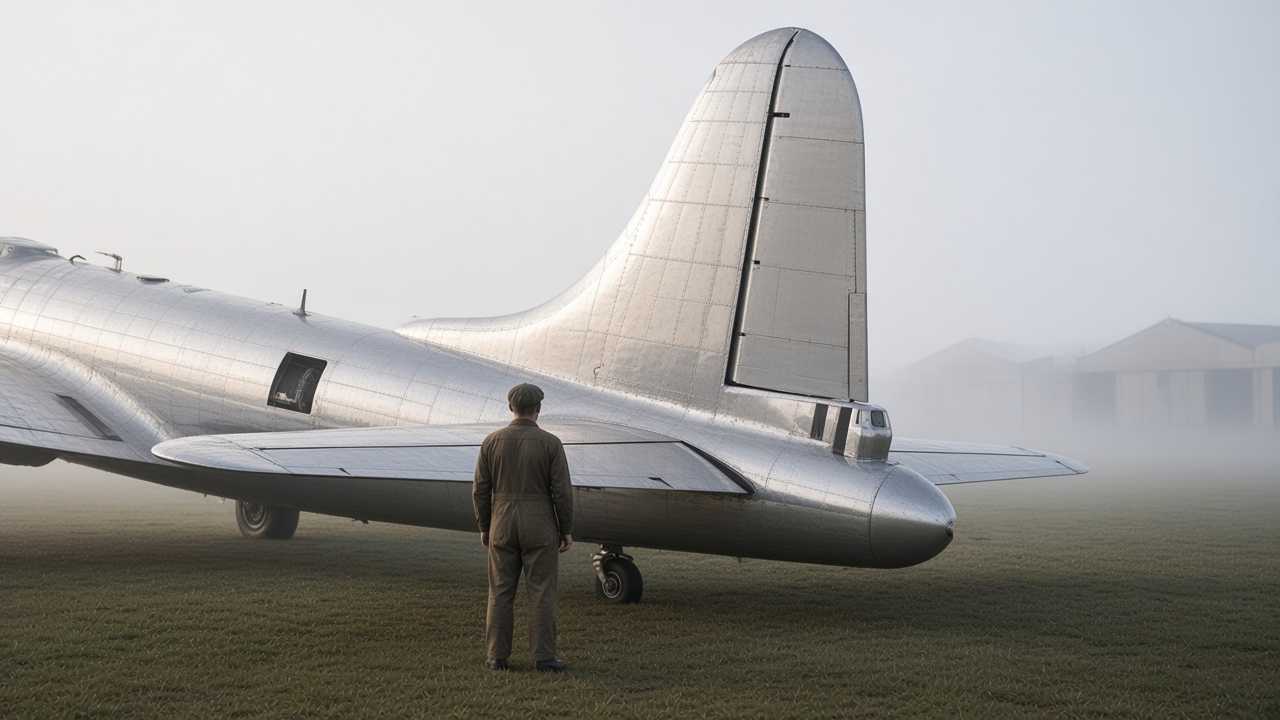
On the morning of October 30, 1935, Boeing's Model 299 lined up for takeoff at Wright Field in Dayton, Ohio. It was the prototype of the B-17 Flying Fortress, in an Army Air Corps evaluation against designs from Martin and Douglas.
Takeoff came at about 9:30 a.m. The run looked normal. Then the nose kept rising. The plane broke ground at about 74 mph, tail low, climbed a few hundred feet, stalled, turned, and fell back onto a field. It landed on its left wing and burst into flames.
I'm Damon Nelson. I've been a marketer and developer for more than 30 years, and this story is for anyone who hands work to a VA or an AI agent. The men in that cockpit were not beginners. That's the point.
The crew knew what they were doing
Five men were on board. Maj. Ployer P. "Pete" Hill, chief of the Flying Branch at Wright Field, was flying. He was an experienced test pilot, but this was his first flight in this airplane. Lt. Donald Putt was co-pilot. Leslie R. Tower, Boeing's chief test pilot, stood behind them to advise. He had flown it from Seattle to Dayton. John B. Cutting and Mark H. Koogler rode along.
Hill was pulled from the burning wreck and died later of his injuries. Tower, badly hurt, gave testimony and, historian Walter J. Boyne writes, "apparently blamed himself." Then he died too. Putt, Cutting and Koogler survived.
What the board found
A board of officers at Wright Field issued its findings on November 15, 1935. The crash was "not due to structural failure, or to the malfunctioning or failure of any of the four engines, the airplane control surfaces or the automatic pilot, but to the locked condition of the rudder and elevator surface controls (primarily the latter)."
The gust lock kept the big elevator and rudder from moving in the wind while the plane sat parked. Boeing had put a lever in the cockpit so the crew could release it from their seats. That convenience made the mistake possible. Nobody had to walk around and free the tail.
The elevator was locked at 12.5 degrees. On the ground you'd barely notice, and the engine run-up had been done in that same position. Once airborne, the locked elevator drove the nose up into a stall. The board judged that a pilot taking off that way was unlikely to discover the lock in time.
The board didn't stop at blaming the crew
The board listed three possibilities. No one tried to release the lock. The handle was only partly pressed, so the pin only partly pulled out. Or the handle was fully pressed and the system failed to release. "There is no evidence to show that the system had ever malfunctioned, but due to the inherent design it must be considered a possibility."
Boyne notes that a locked elevator points toward the crew, "but the board did not say that directly." I'll stick with the board's wording.
Putt's own words came decades later, in a 1974 interview with Murray Green, as quoted by Air Combat Command: "We took off with the controls [elevator and rudder] locked. It was the first airplane in which you could lock the control surfaces from the cockpit. When we taxied out, for some reason we were in a hurry. Those were the days before the checklists."
A 2023 Smithsonian essay adds that Hill tried to free the controls in flight, too late.
THREE EXPERTS. ONE NEW LEVER. NOBODY CALLED IT OUT.
Too much airplane?
The Model 299 lost the competition. The Air Corps picked Douglas. But Boeing got a consolation contract for 13 Y1B-17s, and the program lived.
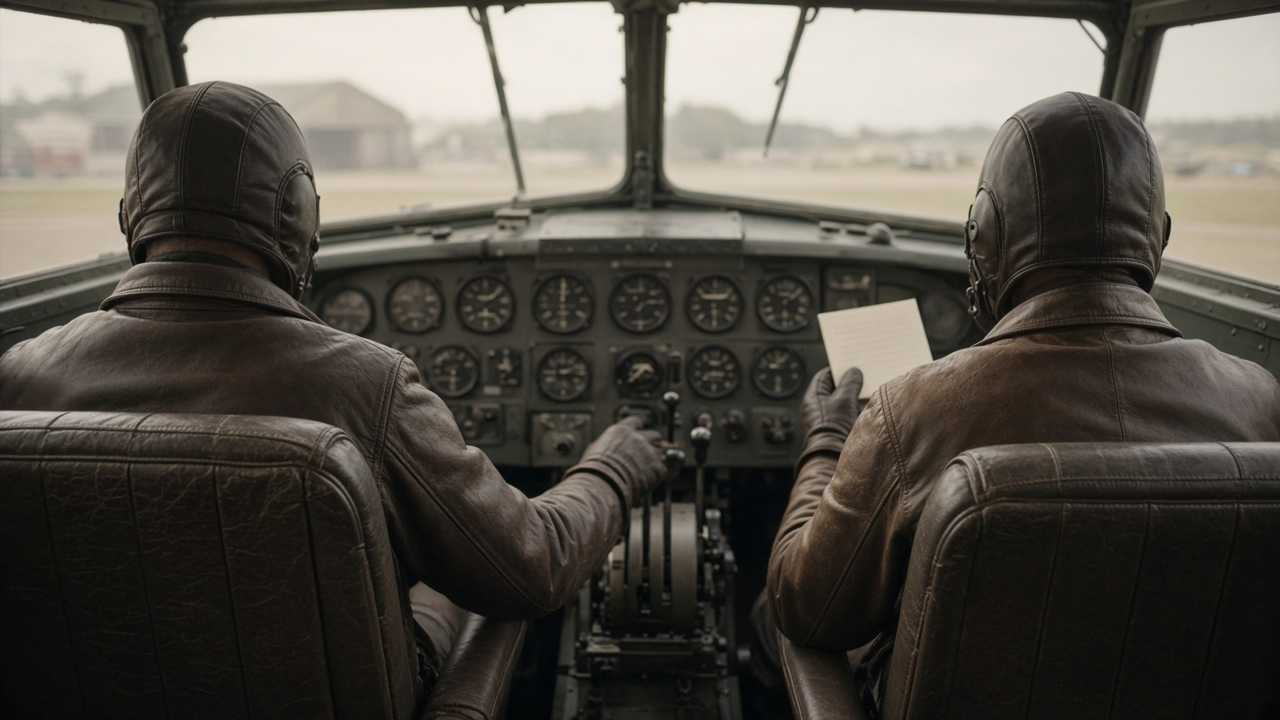
Critics said the bomber was too complex to fly. The Air Corps' answer was that the limit was human memory, not the airframe. So, Boyne writes, "Air Corps personnel developed checklists the crew would follow for takeoff, flight, before landing, and after landing."
Who exactly wrote them is disputed. Atul Gawande, quoted by the Smithsonian, says Air Corps senior staff "turned to their own test pilots." A 2020 magazine profile says "Boeing developed a 'checklist'". Those can't all be right in the same way.
The Model 299 went on to be the prototype for 12,730 B-17s.
The idea was older than the crash
Checking things before flight was not new in 1935. Boyne points to earlier guidance going back to 1911, including Curtiss's "Hints on Flying" and RAF drills, which mostly expected pilots to memorize the steps. Even in 1937, RAF instructions told pilots "to learn the drill." What the Model 299 crash changed was the method: a written, handheld list, read out loud, became standard.
By World War II, the official B-17 pilot training manual told crews the plane was too complex for even experienced pilots to memorize. It called the checklist the "only sure safeguard" and said it was "absolutely essential that the cockpit checklist be used properly by pilot and co-pilot at all times." The co-pilot called each item aloud. The assigned crew member did it. Then came the answer: "Checked."
ONE PERSON READS. ONE PERSON DOES IT. "CHECKED."
Where it went next
The method spread through military flying, then the airlines, and much later into surgery. In a study of the World Health Organization's 19-item Surgical Safety Checklist in eight hospitals, published in the New England Journal of Medicine on January 29, 2009, inpatient deaths fell from 1.5 percent to 0.8 percent and complications from 11.0 percent to 7.0 percent. That's a before-and-after study, not a randomized trial, and a later borrowing of the method rather than a straight line from 1935.
How to use it in your business
Here's what I take from it. Hill, Tower and Putt weren't careless. A new cockpit had a step their habits didn't cover yet, and three capable people can all assume someone else handled the obvious thing.
That's where a lot of small teams are with delegated work. A VA publishes a page or issues a refund. An AI agent drafts, schedules, or touches an ad account. No single step is hard. The list is long, and one missed toggle can be expensive. Telling a capable person, or a capable model, to "be careful" is the pre-1935 method. The list doesn't replace judgment. It covers the binary stuff: locked or free, on or off, set or not set.
How to use it: Write down only the steps that are easy to skip and costly to miss, your gust-lock steps. For anything you can't undo (publish, send, charge, delete), have one person or system propose it and another confirm it. Nobody skips the list for being senior. If an approval is missing, the work stops. And when your cockpit changes, with a new tool or a new rule, rewrite the list.
Sources
- National Museum of the United States Air Force, "Model 299 Crash" (board findings dated November 15, 1935): https://www.nationalmuseum.af.mil/Visit/Museum-Exhibits/Fact-Sheets/Display/Article/610002/model-299-crash/
- Col. Timothy P. Schultz, "Where did checklists come from?" Air Combat Command, March 7, 2012 (citing the Donald L. Putt interview by Murray Green, 1974, USAFA Library): https://www.acc.af.mil/News/Article/200135/where-did-checklists-come-from/
- Walter J. Boyne, "The Checklist," Air & Space Forces Magazine, August 1, 2013: https://www.airandspaceforces.com/article/0813checklist/
- Dave Kindy, "On. Set. Checked.," Air & Space Quarterly, National Air and Space Museum, Winter 2023: https://airandspace.si.edu/air-and-space-quarterly/winter-2023/set-checked
- Robert S. Dudney, "Namesakes: Pete Hill," Air & Space Forces Magazine, April 1, 2020: https://www.airandspaceforces.com/article/namesakes-pete-hill/
- 303rd Bomb Group Association, "B-17 Cockpit Checklist": https://www.303rdbg.com/checklist-cockpit.html
- Alex B. Haynes, Atul A. Gawande, and others, "A Surgical Safety Checklist to Reduce Morbidity and Mortality in a Global Population," New England Journal of Medicine 360 (January 29, 2009): https://www.nejm.org/doi/full/10.1056/NEJMsa0810119