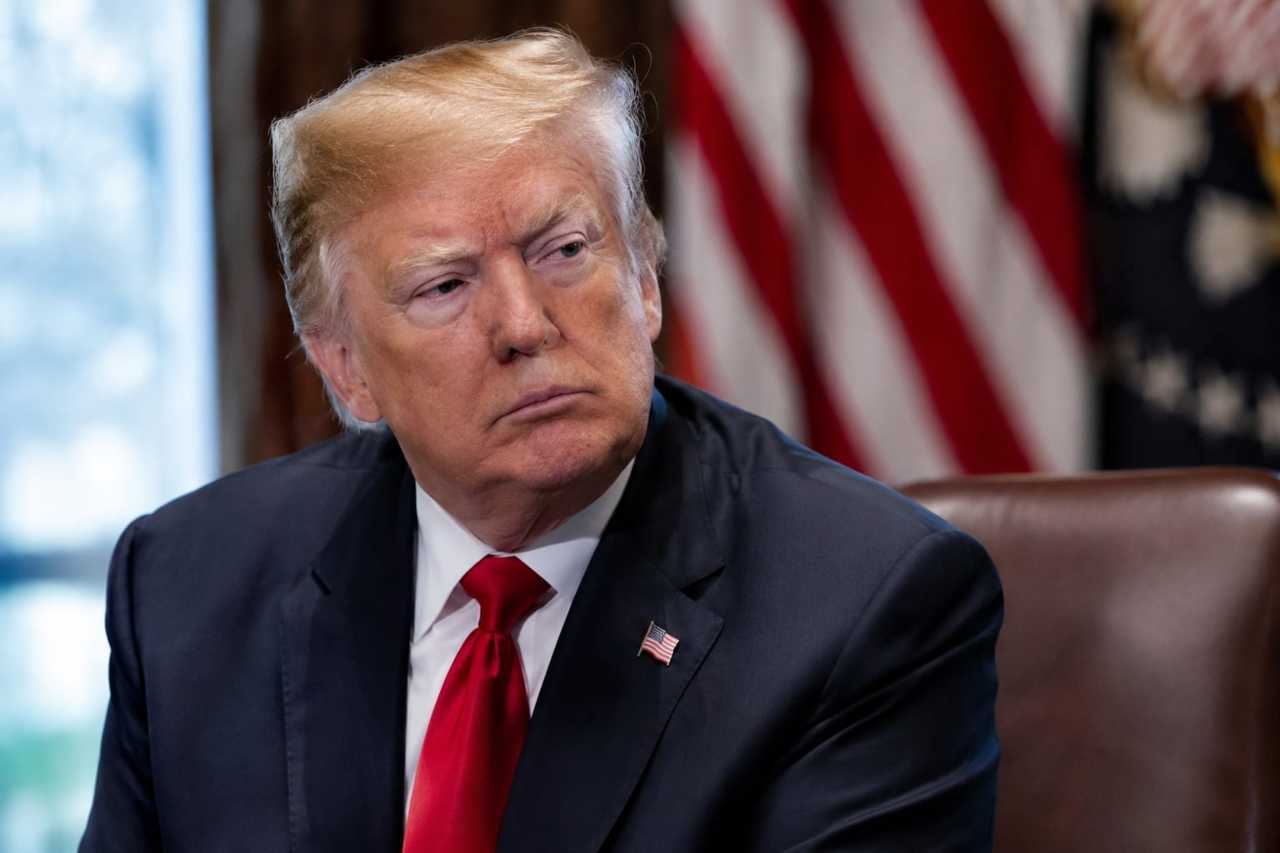
President Donald Trump told CBS News' "60 Minutes" that he will not forgive some of his political enemies, even if doing so were the price of entering heaven. The comments came during his first sit-down interview since the midterm elections, in a segment that aired Nov. 8 and was conducted by correspondent Ross Douthat.
Asked what he thought would happen to him after death, Trump said he considers himself a religious person and expects to go to heaven "in theory." Douthat then brought up Erika Kirk, widow of conservative activist Charlie Kirk, who publicly forgave her husband's alleged killer during his memorial in September 2025. Douthat pointed out that Trump, speaking after Kirk's widow at that same memorial, had said he hated his opponents and did not want the best for them.
Douthat posed a direct hypothetical: if entering paradise required Trump to feel love and forgiveness for people like James Comey and Nancy Pelosi, could he do it? Trump said the easy answer would be to simply claim yes, but added that doing so would make him dishonest. "Then I wouldn't be real, would I?" he said. He described the people he can't forgive as dishonest and bad for the country, saying he loves the country more than he could ever love people like that.
When Douthat pressed further, asking plainly whether the answer was no, Trump confirmed it. He named Comey specifically, who as FBI director oversaw the investigation into possible ties between Trump's 2016 campaign and Russia, and who has since faced federal charges during Trump's second term that Comey has called political retaliation. Trump also referenced Pelosi, under whose speakership he was impeached twice. "I do hate some of my enemies," Trump said, adding that he believes they've been terrible to him and pointing to what he called "the weaponization" he's been put through.
What I'd tell a client about this
Here's the lesson I'd pull out of this story if a client brought it to me: honesty about your limits is more valuable than a performance of virtue you can't actually deliver.
Trump had an easy out in that interview. He could have said "yes, I forgive them" and moved on, and most people would have accepted it without a second thought. Instead, he chose to say the harder, less flattering thing, because the polished answer would have been a lie. That's worth sitting with, whatever you think of his politics.
In my work, I turn news like this into one useful lesson for clients, and this one is simple: don't let the pressure to look good talk you into claiming a feeling or a forgiveness you haven't actually reached. If you're still angry at a business partner who burned you, a family member who let you down, or a former employer who treated you badly, pretending otherwise doesn't heal anything. It just buries it until it resurfaces at a worse time. Real growth starts with naming where you actually stand, not where you wish you stood.
That doesn't mean holding onto resentment is healthy or that it should be the goal. It means the first honest step matters more than skipping straight to a forced resolution. You can't process what you won't admit to feeling.
One small action for this week
Think of one person you say you've "moved past" but haven't, and write down honestly how you still feel about that situation. You don't have to share it, fix it, or forgive it this week. Just stop performing a resolution you haven't reached. That honest starting point is the only one that leads anywhere real.

If you want help working through what to do with that honesty once you've named it, that's exactly the kind of thing coaching can walk through with you, one real step at a time.
See also our earlier piece: California State Workers Walk Out Over Office Mandate and Pay