
On August 14, 1939, President Franklin Roosevelt told reporters at Campobello Island that Thanksgiving would come a week early that year. He would make it "not the last Thursday but the Thursday before the last Thursday in November."
Retailers cheered. Governors, football coaches and the selectmen of Plymouth, Massachusetts, did not. The country ended up with two Thanksgivings, and it kept them for three years.
I'm Damon Nelson. I've been a marketer and developer for more than 30 years, and this story is for anyone who has moved a launch date, a renewal day or a price change that other people had already planned around. Thanksgiving is November 26 this year, so it's a good week to look at the time the country argued over the date.
Why 1939 looked like a problem
November 1939 had five Thursdays: the 2nd, 9th, 16th, 23rd and 30th. Under the custom of naming the last Thursday, Thanksgiving would land on the 30th.
On June 26, 1939, Lowell Mellett, executive director of the National Emergency Council, sent FDR a memo. With "only twenty shopping days and three Sunday newspaper-ad days between November 30 and December 25," he wrote, retailers and publishers "are anticipating one of the worst shopping periods in many years." Other sources count 24 days, so call it about three and a half weeks. The economy was still soft after a severe recession in 1937 to 1938.
It wasn't one letter, and it wasn't the first try
The popular version credits one letter. Lew Hahn, general manager of the National Retail Dry Goods Association, did write Commerce Secretary Harry Hopkins on August 4, 1939. He estimated that "from 12 to 15 per cent of the entire annual retail trade is transacted between Thanksgiving and Christmas." That's a trade association's estimate, not a measured figure.
But Mellett's memo came first. And retail groups had asked for an earlier date in 1933, too. On October 13, 1933, the White House said no, because a change "would cause considerable confusion, since in many States the Legislatures have fixed the date by statutes." The objections of 1939 were known six years earlier.
At a press conference on Campobello Island on August 14, 1939, FDR said he had been "hearing from a great many people for the last six years, complaints that Thanksgiving Day came too close to Christmas." He called Thanksgiving "a perfectly movable feast" with "nothing sacred about it." The formal proclamation, number 2373, followed on October 31. It was a recommendation, "without legal force," as Prologue puts it.
Who was glad, and who wasn't
Frederic Gimbel of Gimbel Brothers welcomed "a more normal shopping season." Walter Hoving of Lord & Taylor predicted "as much as $1,000,000,000 additional business might be generated in manufacturing and distribution lines." That was a forecast, not a result.
Plymouth's selectmen wired that the change meant "sacrificing the real significance of the day for the purpose of satisfying commercial interests." An early Gallup poll showed 62 percent against, though Prologue says that poll was unduly influenced by New England. The states split roughly in half, often along party lines. Counts differ by source, so I won't give a single number.
The name came from Atlantic City's Republican mayor, Charles D. White. Vox reports he said the city would observe the early date only "as 'Franksgiving,' in honor of our President."
A SOUND REASON. SOMEONE ELSE'S CALENDAR.
Did it work?
It is still unproven. FDR chose the early date again for 1940 (November 21) and 1941 (November 20), so it was three years of two Thanksgivings, not two.
Forbes reports that November and December sales in 1939 rose 10 percent from a year earlier to $8.3 billion. That's Forbes's figure, not traced to a primary table, and a rising economy muddies any comparison. New York merchants said on November 28, 1939, that the date had not spurred early buying.
In late 1940 New York Mayor Fiorello LaGuardia asked his commerce commissioner whether retailers' claims "have been fulfilled." He wrote that he was "somewhat surprised at the silence of some of these retailers, while the President is taking all the heat of the criticism because of the change of date."
The May 6, 1941, report covered replies from 203 of about 2,000 stores in the five boroughs. It found no greater overall sales. 76 stores favored the early date, 94 opposed it and 33 had no opinion. Prologue, citing Commerce Department files, also says the retailers' own association "had reversed itself at an unpublicized January convention." That's one article's claim, not independently confirmed.
On May 20, 1941, FDR said the experiment "did not work." The 1941 date stood because of "rather definite commitments to our calendar makers and the retail stores themselves," but "next year it will return to the last Thursday of November."
Later research leans toward the retailers' theory. Robert Urbatsch (2013) finds longer seasons bring "detectably larger seasonal increases in national employment." I've seen only the abstract, and it covers many years, not the 1939 shift. The fair summary is unproven at the time, plausible in theory.
The fix was a rule
Congress settled it by law. The House passed a "last Thursday" bill on October 6, 1941, noting "there is no law fixing the date other than the President's Proclamation." On December 9, 1941, the Senate changed "last" to "fourth." FDR signed it on December 26, 1941.
Senator John Danaher explained why. The committee made it "the fourth rather than the last Thursday simply to have a fixed date so that everyone will know from now on what day is to be Thanksgiving Day."
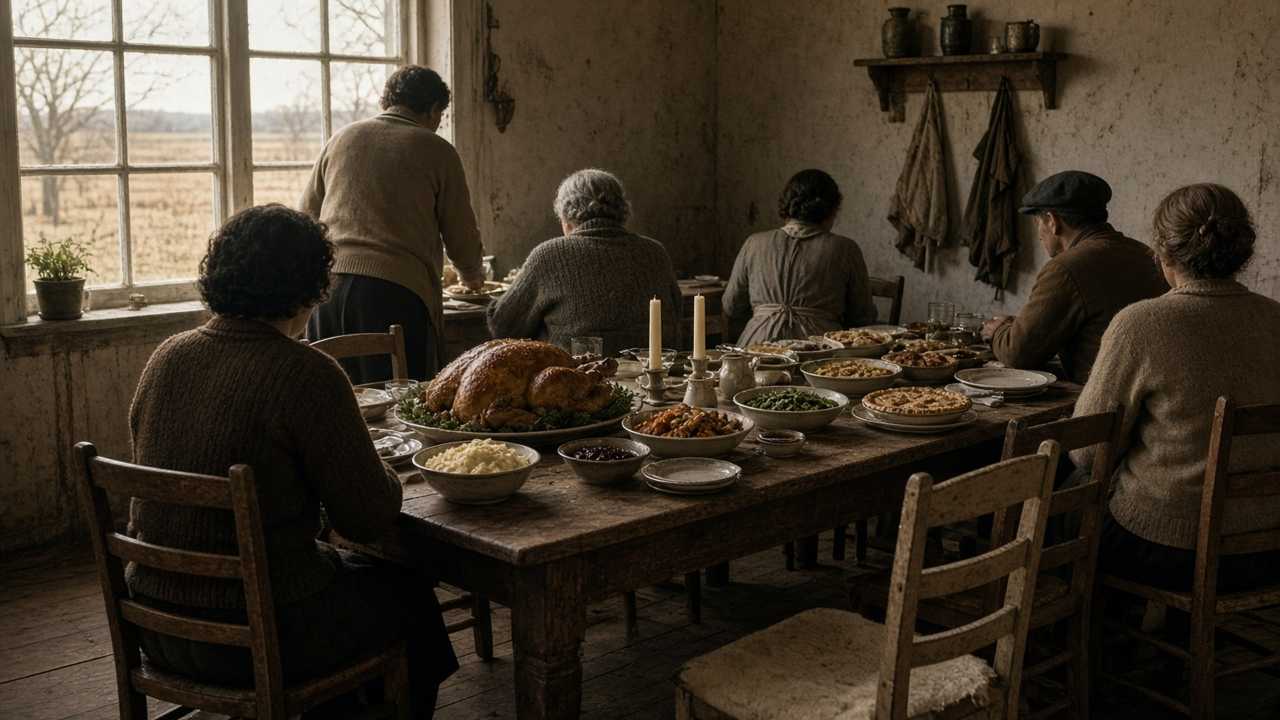
That puts the holiday between November 22 and 28, never on the 29th or 30th. One accuracy note: FDR's 1940 and 1941 dates were the third Thursday, so the fourth-Thursday rule matched his date only in 1939. By 1942 the country observed one Thanksgiving, though Prologue says some governors held to the old date as late as 1951.
FOURTH, NOT LAST. A DATE EVERYONE COULD PLAN AROUND.
How to use it in your business
Here's what I take from it. The retailers' arithmetic was reasonable. The trouble was everyone else's schedule, and the people who had no say were the loudest. LaGuardia's line about who was taking the heat is the best one in the whole record.
How to use it: Before you move a date other people rely on, list everyone whose plans depend on it, and what each of them loses. Give notice early, since complaints in 1939 centered on short notice. Decide ahead of time how you'll know it worked, because the 1941 reversal rested on thin, mixed numbers gathered after the fact. Make the people who benefit say so out loud, so you aren't taking all the heat alone. And if you have to change a date, change it into a rule people can plan around, not a one-time exception that gets argued again next year.
Sources
- G. Wallace Chessman, "Thanksgiving: Another FDR Experiment," Prologue 23, no. 3 (Fall 1990), National Archives: https://www.archives.gov/publications/prologue/fdr-thanksgiving-experiment
- National Archives, "Congress Establishes Thanksgiving": https://www.archives.gov/legislative/features/thanksgiving
- American Presidency Project, "Proclamation 2373, Thanksgiving Day," October 31, 1939: https://www.presidency.ucsb.edu/documents/proclamation-2373-thanksgiving-day
- FDR Presidential Library and Museum, "Roosevelt Trivia": https://www.fdrlibrary.org/roosevelt-trivia-2
- Andrew Prokop, "When FDR moved Thanksgiving: the presidential power grab that tore a nation apart," Vox, November 26, 2014 (updated 2016): https://www.vox.com/2014/11/26/7280561/franksgiving-fdr-thanksgiving
- Abram Brown, "When President Roosevelt Tried To Save Christmas, And America Ended Up With Two Thanksgivings," Forbes, November 28, 2019: https://www.forbes.com/sites/abrambrown/2019/11/28/when-president-roosevelt-tried-to-save-christmas-and-america-ended-up-with-two-thanksgivings/
- Robert Urbatsch, "Employment effects of Thanksgiving timing," Economics Letters 119(1), 2013: https://ideas.repec.org/a/eee/ecolet/v119y2013i1p42-44.html